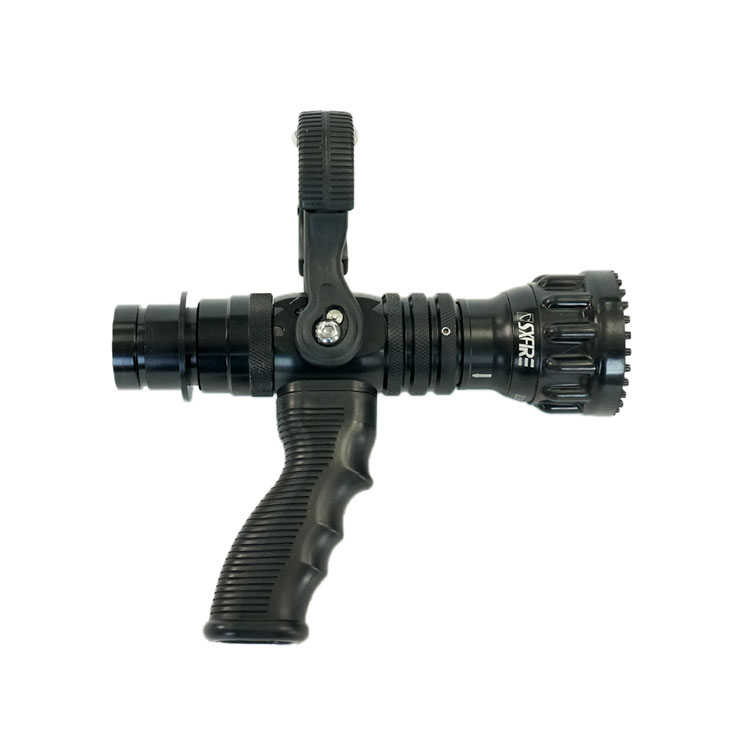

A portable oscillation fire monitor provides controlled water delivery for firefighting operations where a fixed monitor system may not be practical. Its adjustable horizontal and vertical movement helps direct a water jet or fog spray toward different parts of a fire scene, while its portable structure allows crews to position the equipment where it is needed.
For industrial facilities, fuel storage areas, and emergency response teams, choosing the right monitor involves evaluating flow rate, operating pressure, jet reach, spray pattern, and connection requirements. These factors influence how effectively the equipment can support different firefighting tasks.
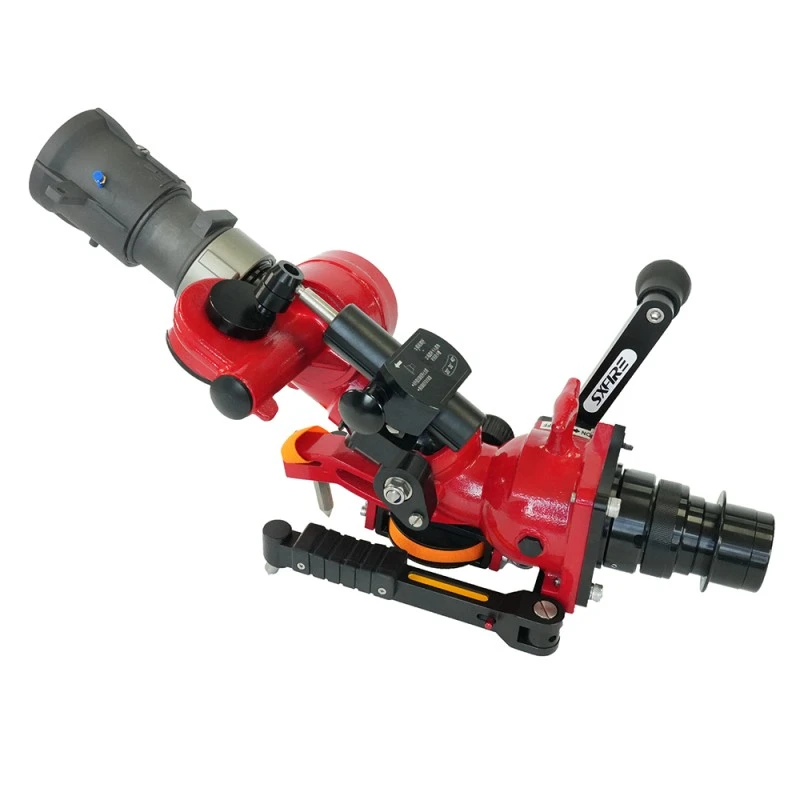
PLENT Portable Oscillation Fire Monitor for industrial firefighting applications.
1. How Does a Portable Oscillation Fire Monitor Work?
2. Key Features and Operating Benefits
3. Model and Performance Comparison
1. How Does a Portable Oscillation Fire Monitor Work?
A portable oscillation fire monitor connects to a suitable water supply or firefighting hose system. Once water enters the monitor, the nozzle directs the discharge as a concentrated jet or a fog spray, depending on the selected operating mode.
The oscillation mechanism allows the monitor to move across a defined horizontal range. This movement helps distribute water over a wider area without requiring operators to continuously reposition the entire unit. Vertical adjustment allows the discharge direction to be changed to suit the fire location and surrounding conditions.
Actual coverage depends on water pressure, flow rate, nozzle configuration, wind, and the installation surface. The monitor should therefore be selected according to the site's firefighting plan rather than maximum reach alone.
2. Key Features and Operating Benefits
Adjustable Water Discharge
The monitor supports jet and fog discharge modes. A concentrated jet can deliver water over a longer distance under suitable conditions, while fog spray can provide a broader water distribution pattern. The appropriate mode depends on the fire type, surrounding hazards, and the response procedure.
Controlled Horizontal and Vertical Movement
Horizontal oscillation helps cover a wider section of the target area, while vertical adjustment changes the direction of the stream. These functions can reduce the need for repeated manual repositioning during an operation.
Portable Construction
A portable design allows crews to move the equipment between suitable operating locations. Before use, the monitor must be positioned on a stable surface and secured according to the manufacturer's instructions to manage reaction forces during discharge.
Material and Connection Options
The PLENT portable oscillation fire monitor range uses an aluminum alloy body and nozzle. Connection configurations may include Storz, instantaneous, NH, and other options depending on the required setup. Confirm the actual inlet and outlet specifications before connecting the unit to existing firefighting equipment.
3. Model and Performance Comparison
The following table summarizes the listed performance specifications for three PLENT portable oscillation fire monitor models. These values provide a starting point for comparing flow capacity and discharge reach.
| Specification | PSY6/20W-B | PSY6/30W-B | PSY8/40W-B |
|---|---|---|---|
| Working Pressure | 6 bar / 87 PSI | 6 bar / 87 PSI | 8 bar / 116 PSI |
| Flow Rate | 1,200 LPM / 317 GPM | 1,800 LPM / 475 GPM | 2,400 LPM / 634 GPM |
| Maximum Reach | ≥ 50 m | ≥ 63 m | ≥ 71 m |
| Horizontal Travel | -20° to +20° | -20° to +20° | -20° to +20° |
| Vertical Travel | +20° to +70° with personnel operating; +30° to +70° without personnel | +20° to +70° with personnel operating; +30° to +70° without personnel | +20° to +70° with personnel operating; +30° to +70° without personnel |
| Maximum Fog Angle | 120° | 120° | 120° |
| Discharge Pattern | Jet or fog | Jet or fog | Jet or fog |
| Inlet | 2.5 in, customizable | 2.5 in, customizable | 2.5 in, customizable |
| Outlet | 2.5 in / 63.5 mm | 2.5 in / 63.5 mm | 2.5 in / 63.5 mm |
| Net Weight | 10 kg | 10 kg | 10 kg |
| Body and Nozzle Material | Aluminum alloy | Aluminum alloy | Aluminum alloy |
Higher flow capacity may be useful for applications requiring greater water delivery, but the selected model must remain compatible with the available water supply, hose diameter, operating pressure, and site requirements. Confirm the latest technical data with the manufacturer before final equipment selection.
4. Typical Applications
Oil and Gas Facilities
Oil and gas sites may require equipment capable of delivering substantial water flow to designated fire response areas. A portable monitor can support planned emergency arrangements where compatible water supplies and stable deployment points are available.
Fuel Storage Areas
Fuel storage facilities need firefighting equipment selected for the specific hazards present. Water monitors may form part of a wider fire protection system, but water alone is not suitable for every fuel or fire scenario. Foam equipment and other protective measures may be required under the site's emergency plan.
Mining and Industrial Sites
Mining operations and industrial plants can have large work areas, changing equipment layouts, and demanding operating conditions. Portable monitors can provide an adaptable discharge point for designated emergency response tasks when access, footing, and water supply have been assessed.
Fire and Rescue Operations
Emergency response teams may use portable monitors when additional water delivery or wider discharge coverage is needed. Operators should follow local procedures and maintain safe distances from the fire, hazardous materials, and unstable structures.
Marine and Chemical Environments
Marine facilities and chemical plants may require specific connection standards, corrosion considerations, and operating procedures. Confirm material compatibility, connection dimensions, and the suitability of the selected discharge method for the intended environment.
5. How to Select the Right Model
Selecting a portable oscillation fire monitor starts with the actual demands of the site. The following factors help narrow down the suitable configuration.
Required flow rate: Estimate the water demand specified in the fire protection plan. A higher flow model also requires a water supply and hose arrangement capable of supporting its operating conditions.
Operating pressure: Check the pressure available at the monitor under flow, not only the static pressure of the water supply. The pump, hose, fittings, and monitor must operate within their specified limits.
Discharge reach: Compare the stated reach with the distance between the deployment point and the target area. Actual reach may vary with pressure, nozzle setting, weather, and other site conditions.
Movement range: Check whether the horizontal and vertical travel ranges suit the intended coverage area. Ensure that surrounding structures do not obstruct the movement of the monitor.
Connections: Confirm the inlet size, outlet size, and coupling type. Customizable connections should be agreed upon before production or ordering to avoid compatibility problems on site.
Installation and stability: Review the operating instructions, anchoring requirements, and reaction forces. A portable monitor must be deployed on an appropriate surface and operated within its specified limits.
6. Inspection and Maintenance
Regular inspection helps maintain the readiness of firefighting equipment. The maintenance schedule should follow the manufacturer's instructions and the facility's fire protection procedures.
Before operation: Inspect the body, nozzle, couplings, seals, and movement mechanism for visible damage, leakage, corrosion, or obstruction. Check that the monitor is properly positioned and connected.
During testing: Verify that the discharge pattern and movement functions operate as intended. Testing should be performed by trained personnel in a controlled area with adequate precautions for water pressure and discharge forces.
After use: Flush the equipment where required, drain it according to the instructions, and check for damage or debris. Store the monitor in a suitable location so that its connections and moving parts remain protected.
Documentation: Record inspections, functional tests, repairs, and replaced components. Any fault affecting safe operation should be addressed before the equipment is returned to service.
7. Frequently Asked Questions
Q1: What is a portable oscillation fire monitor used for?
A portable oscillation fire monitor delivers water in a controlled jet or fog pattern and moves through a defined horizontal range. It can support firefighting operations at industrial facilities and other designated response locations.
Q2: What flow rates are available for the PLENT models listed above?
The listed models provide nominal flow rates of 1,200 LPM, 1,800 LPM, and 2,400 LPM. Confirm the required operating pressure and current specifications before ordering.
Q3: Can the monitor switch between jet and fog patterns?
The listed models support jet and fog discharge. The appropriate pattern depends on the firefighting task and operating conditions.
Q4: What materials are used in the monitor?
The listed product specifications identify aluminum alloy for the body and nozzle. Confirm material and connection details for the exact model and configuration.
Q5: Can the inlet connection be customized?
The listed specifications identify a 2.5-inch inlet with customization available. Connection requirements should be confirmed with the manufacturer before placing an order.
Q6: What should be checked before installing a portable fire monitor?
Check water supply capacity, operating pressure, hose and coupling compatibility, deployment stability, required coverage, and the manufacturer's operating instructions.
Looking for a Suitable Fire Monitor?
Find a portable oscillation fire monitor that matches your required flow rate, operating pressure, discharge reach, and connection configuration. Contact PLENT to discuss the technical requirements of your firefighting project.
Explore Product Details